
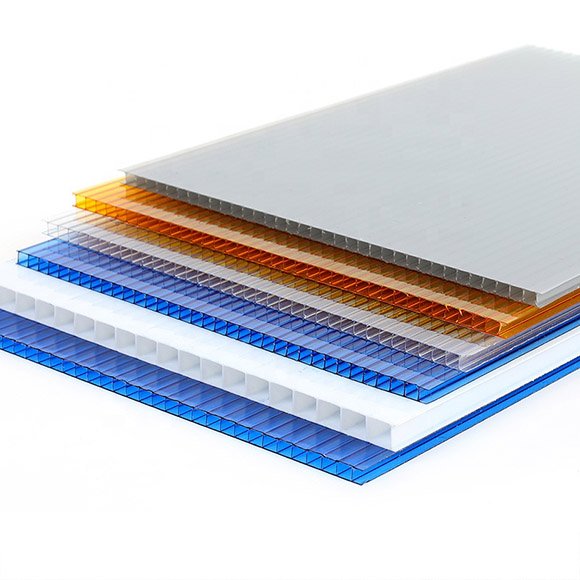
Polycarbonate has become an important material across many industries because of its combination of strength, durability, transparency, and versatility. From construction and transportation to electronics, agriculture, and manufacturing, polycarbonate products are used in applications where conventional materials may not provide the required performance. Behind these products are specialized companies that understand material technology, production processes, quality requirements, and customer needs. A polycarbonate manufacturer plays an essential role in transforming raw materials into reliable products designed for specific industrial applications.
What Is Polycarbonate?
Polycarbonate is a thermoplastic polymer known for its high impact resistance and excellent dimensional stability. Unlike many traditional plastics, it can withstand significant mechanical stress while remaining relatively lightweight. It can also be produced in transparent, translucent, or opaque forms, depending on the application.
Its useful characteristics include resistance to impact, good temperature performance, optical clarity, and ease of fabrication. These properties make polycarbonate suitable for sheets, panels, components, protective products, glazing systems, machine guards, and numerous specialized applications.
A polycarbonate manufacturer uses controlled production techniques to convert polycarbonate resin into products with specific thicknesses, dimensions, finishes, and performance characteristics.
The Manufacturing Process
Producing high-quality polycarbonate products involves several carefully managed stages. The process generally begins with the selection and preparation of suitable raw materials. Manufacturers must ensure that the material meets the requirements of the intended application.
Material Preparation
Polycarbonate resin needs to be properly prepared before processing. Moisture control is particularly important because excessive moisture can affect the quality and appearance of the finished material. Manufacturers use controlled drying and handling procedures to maintain material consistency.
Depending on the product, additives, stabilizers, pigments, or other materials may also be incorporated. These additions can help provide characteristics such as improved UV resistance, coloration, or specialized performance.
Forming and Processing
Extrusion and injection molding are among the common manufacturing methods used with polycarbonate. Extrusion can produce continuous products such as sheets, profiles, and panels, while injection molding is suitable for producing shaped components and technical parts.
During production, temperature, pressure, cooling, and processing speed must be carefully controlled. Consistent manufacturing conditions help reduce defects and maintain dimensional accuracy.
Finishing and Quality Control
After forming, products may undergo cutting, trimming, surface treatment, printing, coating, or other finishing processes. Quality control is performed throughout production to identify potential issues before products reach customers.
A professional polycarbonate manufacturer may inspect dimensions, surface appearance, mechanical properties, transparency, and other characteristics according to product specifications.
Why Quality Matters in Polycarbonate Manufacturing
Industrial applications often demand materials that can perform consistently over long periods. A small variation in thickness, dimensions, or material properties can affect how a component performs in its final application.
For this reason, quality management is a major responsibility of manufacturers. Production facilities may use inspection equipment and standardized testing procedures to monitor product performance.
Consistent quality is especially important when polycarbonate is used in applications involving impact protection, structural glazing, machine safety, electrical components, or demanding environmental conditions.
Applications Across Modern Industries
Polycarbonate is used in a wide variety of industries because it can be manufactured into different shapes and forms.
Construction and Architecture
In construction, polycarbonate sheets and panels are used for roofing, partitions, skylights, façades, and other architectural applications. Their relatively low weight and impact resistance can make them practical alternatives to some traditional glazing materials.
Multiwall polycarbonate panels can also provide useful insulation characteristics, making them suitable for certain building designs.
Automotive and Transportation
Transportation manufacturers use polycarbonate for various components where reduced weight and impact resistance are valuable. Depending on the design, polycarbonate may be used for lighting components, interior parts, protective covers, and other specialized applications.
Reducing component weight can contribute to broader efficiency goals, making material selection an important part of modern vehicle engineering.
Electronics and Electrical Products
Polycarbonate is also found in electrical and electronic applications. Its insulating characteristics, durability, and ability to be molded into complex shapes make it useful for housings, covers, connectors, and protective components.
Manufacturers serving this sector must pay close attention to dimensional accuracy and application-specific material requirements.
Agriculture
Agricultural structures can use polycarbonate panels for greenhouses and controlled-environment growing systems. Transparent and translucent panels allow light transmission while providing physical protection from outdoor conditions.
The material’s combination of durability and relatively low weight can simplify certain installation and maintenance requirements.
Customization and Industry-Specific Solutions
One of the important roles of a modern polycarbonate manufacturer is providing products that meet specific customer requirements. Industrial customers may need particular dimensions, thicknesses, colors, surface textures, or mechanical characteristics.
Customization can help manufacturers serve industries with very different requirements. A construction project may require large panels, while an electronics company may need precision-molded components.
Manufacturers with flexible production capabilities can work with customers to identify suitable material grades and manufacturing methods. Technical communication between the manufacturer and customer is therefore an important part of successful product development.
Technology and Innovation
Modern manufacturing continues to evolve through automation, improved processing equipment, digital monitoring, and advanced quality-control systems. These technologies can help manufacturers improve consistency and production efficiency.
Automation can assist with repetitive processes, while computerized monitoring systems can track production parameters. Better testing equipment can also help manufacturers identify deviations more quickly.
Research and development remain important as industries seek materials that provide improved performance, longer service life, and more efficient manufacturing.
Sustainability and Responsible Production
Environmental considerations are increasingly relevant to material manufacturing. A responsible polycarbonate manufacturer can contribute by improving production efficiency, reducing material waste, optimizing energy consumption, and exploring recycling opportunities.
Because polycarbonate is a thermoplastic, certain manufacturing waste streams can potentially be recovered and reused where appropriate and technically feasible. Product design can also influence material efficiency by reducing unnecessary material use.
Sustainability strategies vary according to manufacturing technology, product type, and local requirements, but efficient resource management is becoming an increasingly important consideration throughout the industrial supply chain.
Choosing the Right Manufacturer
Businesses selecting a polycarbonate supplier should consider several factors. Product quality, manufacturing capabilities, technical support, customization options, production capacity, testing procedures, and delivery reliability can all influence the suitability of a supplier.
Customers should also clearly communicate the operating environment and performance requirements of their intended application. Information about dimensions, temperature exposure, impact requirements, optical needs, installation conditions, and expected service life can help a manufacturer recommend an appropriate product.
A reliable polycarbonate manufacturer should be able to provide clear product information and maintain consistent manufacturing standards.
The Future of Polycarbonate Manufacturing
As modern industries continue to demand lightweight, durable, and versatile materials, polycarbonate is likely to remain relevant across numerous applications. Advances in processing technology, product design, and material development may create additional opportunities for its use.
Manufacturers will continue to play an important role by combining material knowledge with efficient production and application-focused engineering. Their ability to produce consistent, customized, and technically suitable products helps businesses integrate polycarbonate into increasingly sophisticated industrial systems.
Conclusion
A polycarbonate manufacturer does much more than produce plastic products. Manufacturers are responsible for material preparation, processing, quality control, customization, technical development, and efficient production. Their work supports industries ranging from construction and transportation to electronics and agriculture.
As modern manufacturing continues to evolve, the demand for materials that combine durability, versatility, and practical performance remains important. Through improved technology, quality management, and responsible production practices, polycarbonate manufacturers can continue supplying solutions that meet the changing requirements of modern industry.