
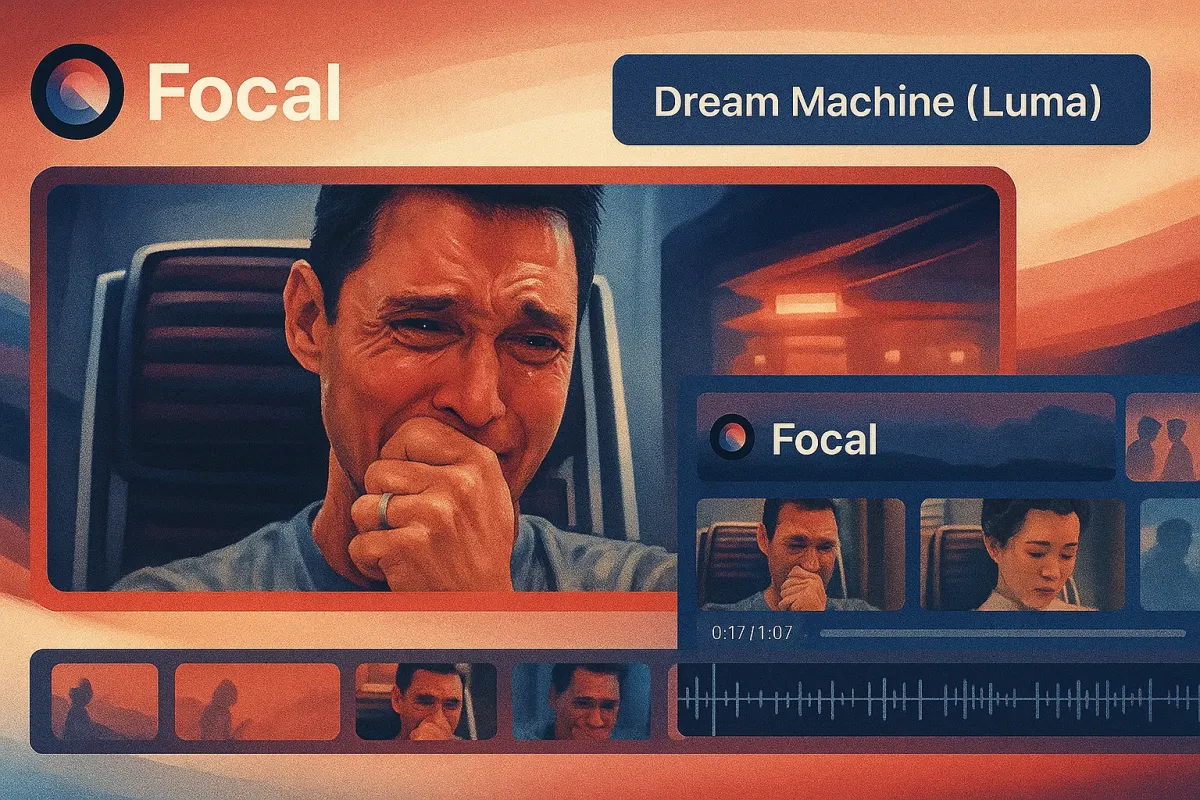
Video production has entered a new era where imagination, technology, and automation are becoming increasingly connected. For decades, creating professional video content required expensive cameras, specialized software, large production teams, and significant amounts of time. Today, artificial intelligence is changing that process by allowing creators to transform simple ideas into dynamic visual content. One technology attracting attention in this transformation is Luma dream machine, an AI-powered video creation platform that demonstrates how quickly the production process is evolving.
The Rise of AI in Video Production
Traditional video production follows a structured process that can involve scriptwriting, storyboarding, filming, lighting, acting, editing, visual effects, sound design, and post-production. While this approach remains essential for many professional projects, AI tools are introducing faster alternatives for certain stages of production.
Luma dream machine allows users to experiment with video generation from text and visual concepts. Instead of requiring a complete filming setup, creators can describe a scene and explore how artificial intelligence interprets that idea. This approach can make video experimentation more accessible to independent filmmakers, marketers, educators, designers, and social media creators.
The technology does not simply eliminate traditional production methods. Instead, it adds another creative option. A filmmaker can use AI-generated footage for concept development, while a marketing team can quickly visualize an advertising idea before investing in a full commercial shoot.
Turning Ideas Into Visual Concepts
One of the most significant changes introduced by AI video technology is the ability to move from an idea to a visual concept more quickly. Previously, a creative team might spend hours creating storyboards or producing test footage to understand how a scene could look.
With Luma dream machine, creators can describe elements such as environments, subjects, movement, atmosphere, and cinematic style. The resulting video can then serve as a starting point for further creative development.
This capability is particularly useful during pre-production. Directors can explore possible visual directions before cameras are involved. Designers can experiment with different environments. Advertising professionals can test concepts and presentations without immediately committing to expensive production resources.
Making Video Creation More Accessible
Professional video production has traditionally involved a steep learning curve. Cameras, lenses, lighting systems, editing applications, animation software, and visual effects tools can require considerable technical knowledge.
AI-assisted platforms are lowering some of these barriers. A person with a strong creative idea but limited production experience can experiment with visual storytelling through natural-language prompts and iterative generation.
Luma dream machine contributes to this accessibility by allowing creators to focus more heavily on the concept itself. Although effective results still require experimentation and creative judgment, users can explore cinematic ideas without mastering every traditional production technique first.
This accessibility could encourage a wider range of people to participate in video creation. Small businesses, independent artists, students, entrepreneurs, and online creators can experiment with video concepts that might previously have been beyond their budgets.
Changing the Role of the Video Producer
AI does not necessarily remove the need for human creativity. Instead, it is changing what creative professionals spend their time doing.
A traditional producer may coordinate numerous technical and logistical tasks. With AI-assisted workflows, some repetitive activities can become faster, allowing professionals to concentrate on storytelling, direction, creative strategy, and quality control.
The modern video producer may increasingly act as a creative director who guides AI systems rather than personally handling every production stage. Prompt development, visual selection, editing, continuity management, and artistic judgment become important parts of this role.
Human involvement remains essential because AI-generated footage may not always perfectly match the creator’s intention. Selecting the strongest results and refining them requires a clear understanding of storytelling and visual communication.
Faster Prototyping and Experimentation
Speed is another major advantage of AI-assisted video production. Creative teams often have limited time to test multiple ideas, especially when working under commercial deadlines.
AI generation can support rapid prototyping. A company developing a promotional campaign might explore several visual concepts before selecting a final direction. A filmmaker can test different moods for a scene. A content creator can experiment with visual storytelling approaches before producing a larger project.
Luma dream machine can therefore function as an experimentation environment. Instead of treating every visual idea as a costly production decision, creators can explore possibilities more freely.
New Opportunities for Marketing and Advertising
Marketing is one of the industries likely to benefit significantly from AI-generated video. Modern audiences consume enormous amounts of video content across websites, social platforms, streaming services, and digital advertisements.
Brands need to produce engaging visuals while maintaining speed and controlling costs. AI tools can help marketing teams create early concepts, social media assets, product visuals, and creative prototypes.
Luma dream machine may be particularly valuable when a campaign requires imaginative environments or scenes that would otherwise be difficult to film. Instead of building a physical set or organizing a complicated shoot, a creative team can first explore an AI-generated representation of the desired concept.
Supporting Independent Filmmakers and Artists
Large studios have access to extensive production resources, but independent creators often work with smaller budgets. AI video technology can provide additional creative possibilities for people who cannot easily afford traditional production equipment or large teams.
For independent filmmakers, AI can assist with visual development, concept trailers, experimental sequences, and story exploration. Artists can also use generated video as part of multimedia installations, digital artwork, music visuals, or creative projects.
Luma dream machine can become part of an artist’s broader toolkit rather than replacing existing creative methods. Traditional footage, animation, photography, and AI-generated sequences can potentially be combined into a single visual project.
Challenges and Creative Considerations
Despite its possibilities, AI video generation also introduces challenges. Consistency between scenes, accurate movement, realistic interactions, visual continuity, and precise control can be difficult. Generated results may require multiple attempts before they meet a creator’s expectations.
There are also broader questions surrounding originality, copyright, artistic ownership, and responsible AI use. As the technology develops, creators and organizations will need to establish clear policies about how generated content is created, edited, credited, and distributed.
These challenges demonstrate why human oversight remains important. AI can accelerate production, but creative professionals still need to evaluate whether the result communicates the intended message effectively.
The Future of Video Production
The future of video production is unlikely to be entirely traditional or entirely AI-generated. Instead, the industry is moving toward hybrid workflows in which humans and intelligent tools work together.
A filmmaker might write a script manually, use AI to explore visual concepts, film selected scenes traditionally, and then combine everything during post-production. A marketing team might use AI for early prototypes while relying on professional filming for the final campaign.
Luma dream machine represents part of this broader transition. Its importance is not simply that it can generate video, but that it demonstrates a different relationship between imagination and production. When visual ideas can be explored quickly, creators gain more opportunities to experiment.
Conclusion
The changing landscape of video production is being shaped by accessibility, automation, experimentation, and artificial intelligence. Tools such as Luma dream machine are helping demonstrate how a simple creative concept can become a visual experiment without requiring a traditional production setup.
As AI video technology continues to mature, its greatest impact may come from empowering creators to test more ideas, work faster, and explore visual possibilities that were previously difficult or expensive to produce. Human creativity, storytelling, and judgment will remain central, but the tools available to creators are becoming more powerful. The result is a video production landscape where technology does not simply capture ideas—it increasingly helps creators discover what those ideas could become.