
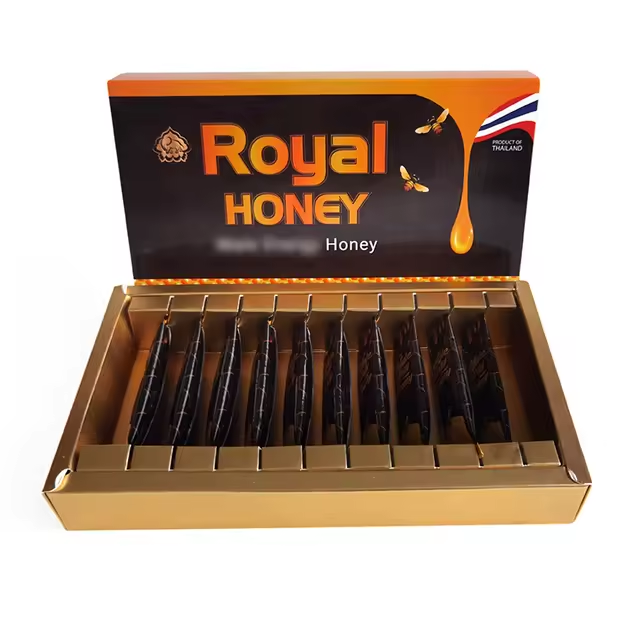
Choosing the right products for resale requires more than simply finding an attractive price. When a product belongs to a specialty category such as honey-based wellness products, wholesalers need to consider quality, consistency, packaging, supplier reliability, and regulatory requirements. Businesses exploring royal honey wholesale options should carefully evaluate every part of the supply chain before placing a large order.
A thoughtful purchasing process can help retailers maintain product consistency, protect their reputation, and provide customers with products that are accurately represented. Whether you operate an online store, specialty shop, or distribution business, the following factors can help you make more informed wholesale purchasing decisions.
Understand the Product and Its Intended Market
Before selecting a wholesale honey product, it is important to understand exactly what you are purchasing. Products marketed under names such as royal honey may vary significantly in ingredients, formulation, packaging, and intended use.
Some products are positioned as traditional honey-based foods, while others may be marketed as specialty wellness products. Retailers should carefully examine product descriptions and avoid assuming that every product with a similar name has the same composition.
Understanding the target market also helps determine which products are appropriate for your customers. Consider whether your buyers are interested in natural food products, specialty honey products, gift items, or other legally permitted categories.
Examine Ingredient Information Carefully
Ingredient transparency is one of the most important considerations when purchasing wholesale products. A reliable supplier should provide clear information about the ingredients used in each product.
Review the ingredient list, serving information where applicable, allergen information, manufacturer details, and other relevant product documentation. If a product contains additional ingredients beyond honey, those ingredients should be clearly identified.
Retailers should be particularly cautious about products making unusually strong or unrealistic health, energy, or performance claims. Claims should be supported by appropriate evidence and comply with the regulations applicable to the market where the products will be sold.
Verify Product Quality and Consistency
Quality consistency matters greatly when buying products in bulk. A sample that looks excellent does not necessarily guarantee that every future shipment will meet the same standard.
Ask potential suppliers about their quality-control procedures. Depending on the product, useful information may include manufacturing standards, batch controls, testing procedures, storage conditions, and traceability systems.
When evaluating royal honey wholesale suppliers, consistency should be considered alongside price. A slightly lower purchase cost may not be beneficial if inconsistent quality results in customer complaints, returns, or damaged brand credibility.
Research the Supplier’s Reputation
The supplier is just as important as the product itself. Before committing to a large wholesale order, research the company’s business history and reputation.
Look for transparent contact information, clear business policies, professional documentation, and consistent communication. Established suppliers should be able to answer reasonable questions about products, packaging, shipping, and quality procedures.
Retailers can also request references or independently review feedback from other business customers where available. Be cautious when a supplier refuses to provide basic product information or pressures you to make a large purchase immediately.
Check Packaging and Labeling Requirements
Packaging plays an important role in protecting products during transportation and storage. It also communicates essential information to customers.
Inspect the packaging design, seal quality, container durability, expiration or best-before information, lot or batch identification, and ingredient labeling. Labels should accurately describe the product and comply with the laws of the country or region where it will be sold.
For online retailers, packaging should also be suitable for shipping. Weak seals, fragile containers, or poorly protected individual packets can increase the likelihood of leakage and customer complaints.
Consider Shelf Life and Storage Conditions
Shelf life is another major factor when purchasing wholesale inventory. Buying a large quantity of a product with a short remaining shelf life can create unnecessary financial pressure.
Ask suppliers about manufacturing dates, expiration or best-before dates, and recommended storage conditions. Determine whether the product requires protection from excessive heat, moisture, direct sunlight, or other environmental conditions.
Proper inventory rotation is also important. Businesses should organize stock so that older inventory is sold before newer shipments whenever appropriate.
Compare Minimum Order Quantities
Wholesale suppliers commonly establish minimum order quantities, but these requirements can vary considerably.
A low minimum order may be useful for a new retailer that wants to test customer demand before investing heavily. Larger minimum quantities may offer better per-unit pricing but can create inventory risks if sales are uncertain.
Calculate your expected sales volume before agreeing to a large order. The best wholesale deal is not always the supplier offering the lowest unit price; it is the option that provides a sensible balance between cost, quantity, quality, and expected demand.
Evaluate Pricing Beyond the Unit Cost
Price comparisons should include the complete cost of acquiring inventory. Consider the wholesale unit price, packaging costs, shipping charges, taxes, import expenses where applicable, and payment-processing costs.
You should also calculate the expected retail margin. A product may appear inexpensive at first but become less profitable after transportation and other expenses are included.
When comparing royal honey wholesale offers, request a complete quotation whenever possible. This makes it easier to compare suppliers on an equal basis.
Ask About Shipping and Order Fulfillment
Reliable fulfillment can have a major impact on a retailer’s operations. Before choosing a supplier, ask about processing times, shipping methods, tracking information, damaged shipments, and replacement policies.
If you sell online, dependable delivery is especially important because customers generally expect accurate shipping estimates and products to arrive in good condition.
It is also useful to understand how the supplier handles stock shortages. A supplier with frequent unexpected inventory gaps may make it difficult to maintain consistent product availability.
Review Regulatory and Compliance Requirements
Regulatory compliance should never be overlooked. Requirements can differ depending on the product’s ingredients, marketing claims, packaging, and destination market.
Retailers should verify that the products they intend to sell are legally permitted in their target market. They should also ensure that advertising and product descriptions do not make prohibited or unsupported health claims.
If a specialty honey product is marketed for a particular wellness or performance purpose, additional regulatory considerations may apply. When necessary, consult an appropriate regulatory or legal professional rather than relying solely on supplier claims.
Start With Samples Before Ordering in Bulk
One of the simplest ways to reduce purchasing risk is to request samples before placing a large order.
Examine the product’s appearance, packaging, labeling, consistency, and overall presentation. If possible, compare samples from several suppliers rather than evaluating only one option.
Sampling can reveal differences that are difficult to identify from photographs or product descriptions. It also provides an opportunity to assess how professionally the supplier handles requests and communication.
Build a Long-Term Supplier Relationship
Once you identify a dependable supplier, maintaining a professional relationship can provide long-term advantages. Clear communication about inventory forecasts, quality expectations, delivery schedules, and future orders can make purchasing more efficient.
A strong supplier relationship may also help businesses receive more predictable service as their order volumes increase. However, retailers should continue monitoring quality rather than assuming that previous successful shipments guarantee identical performance forever.
Make Quality the Priority
Choosing wholesale products should involve a careful evaluation of quality, documentation, supplier reliability, packaging, pricing, shelf life, and compliance. Focusing exclusively on the lowest price can create unnecessary risks for retailers.
For businesses considering royal honey wholesale, a structured purchasing process makes it easier to compare suppliers objectively and select products that fit their business model. By requesting samples, reviewing ingredients and labels, understanding storage requirements, checking supplier credentials, and calculating total costs, retailers can make more responsible purchasing decisions.
The strongest wholesale strategy is built around transparency and consistency. A supplier that provides clear information, dependable fulfillment, appropriate documentation, and consistent products is generally a more valuable long-term partner than one offering an unusually low price without adequate details. With careful research and realistic inventory planning, businesses can develop a wholesale purchasing approach that supports sustainable operations and customer confidence.