
Colorado homeowners need dependable HVAC systems that can keep indoor spaces comfortable through every season. Englewood and the surrounding Denver area experience significant temperature changes, making reliable heating and cooling especially important.
If your current HVAC system is struggling, you may be searching for heating cooling services in Englewood Colorado to handle repairs, maintenance, or replacement. If you are planning to replace your heating system, you may also be researching Heat pump vs furnace Denver to determine which technology is better for your home.
Both systems can provide reliable heating, but their designs, operating methods, and advantages are different.
Why Professional Heating and Cooling Services Matter
Your HVAC system is one of the most important components of your home. When it operates correctly, it helps maintain comfortable temperatures and consistent airflow.
Professional heating cooling services in Englewood Colorado can help homeowners maintain their HVAC systems before small issues become expensive problems.
Typical HVAC services include:
- Furnace repair and installation
- Heat pump repair
- Heat pump installation
- Air conditioner repair
- AC replacement
- Seasonal HVAC maintenance
- Thermostat installation
- Ductwork inspection
- Airflow testing
- HVAC system replacement
Regular service can also help improve system reliability and identify components that may require attention.
Heat Pump vs Furnace Denver: Understanding Your Options
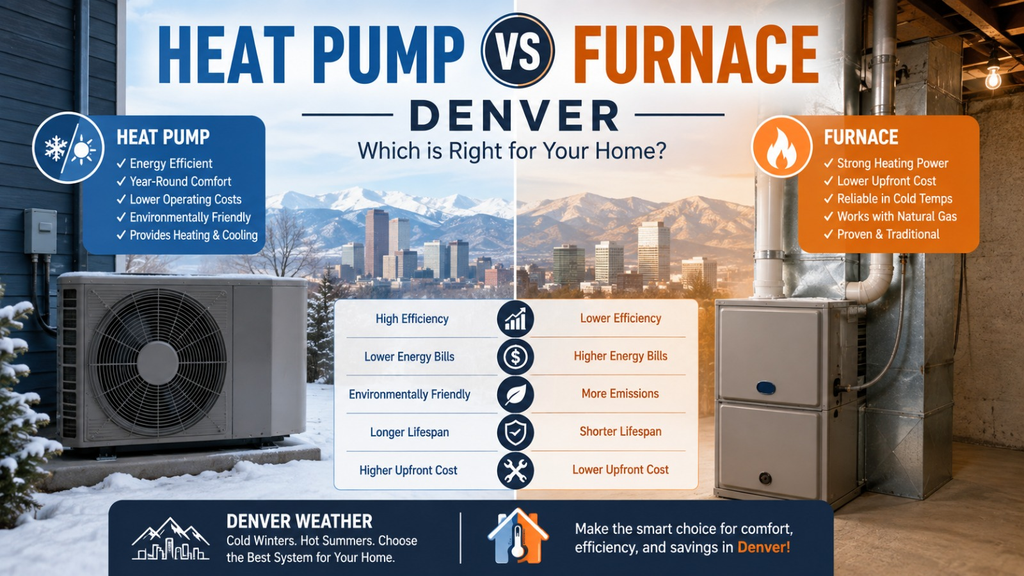
The Heat pump vs furnace Denver comparison starts with how each system heats a home.
A furnace generates heat and distributes warm air through ductwork. A heat pump transfers heat between the outdoors and indoors.
During the winter, a heat pump extracts available heat from outside and moves it into the home. During summer, it reverses the process and removes heat from indoor air.
This means a heat pump can provide both heating and cooling.
A traditional furnace generally provides heating only, so a separate air-conditioning system is normally needed for summer cooling.
How a Furnace Works
A furnace uses a heating source to raise the temperature of air. A blower then distributes the warm air throughout the home.
Natural gas furnaces are widely used in many Colorado homes, although electric and other fuel options are also available.
Modern furnaces can offer efficient and reliable heating when correctly installed and maintained.
Benefits of a Furnace
There are several reasons homeowners continue to choose furnaces.
Strong heating performance:
Furnaces are designed specifically to produce heat and can provide substantial heating output.
Fast warm air:
Because the furnace creates heat directly, warm air can be delivered through the duct system during a heating cycle.
Familiar equipment:
If your home already has a furnace and ductwork, replacing the existing unit with another furnace may require fewer changes.
Multiple options:
Homeowners can choose among different furnace sizes and efficiency levels.
How a Heat Pump Works
A heat pump uses refrigeration technology to transfer heat rather than create it directly.
In heating mode, the outdoor unit absorbs available thermal energy and transfers it indoors. In cooling mode, the system reverses direction and transfers indoor heat outdoors.
The result is a system capable of handling both major HVAC functions.
Benefits of a Heat Pump
Heat pumps can provide several advantages.
Heating and cooling:
One system can provide both functions.
Efficient heat transfer:
The system moves heat instead of generating it through combustion.
Electric operation:
Many heat pumps operate entirely with electricity.
Year-round use:
The same equipment can be used during both winter and summer.
For homeowners looking for modern HVAC technology, these features can make heat pumps an attractive option.
Heat Pump vs Furnace Denver: Which Uses Less Energy?
Energy efficiency is one of the biggest considerations when researching Heat pump vs furnace Denver.
A heat pump’s efficiency depends on outdoor conditions, equipment design, home insulation, system size, and installation quality.
Furnace efficiency depends on the model, fuel type, efficiency rating, operating conditions, and maintenance.
Because energy prices vary, the system with the lower operating cost for one home may not necessarily have the same advantage in another home.
For this reason, homeowners should compare estimated operating costs for specific equipment rather than relying on general assumptions.
Cold Weather and Heat Pump Performance
Colorado homeowners naturally want to know how a heat pump performs during cold weather.
Modern cold-climate heat pumps have improved significantly compared with older designs. Certain models are specifically engineered to maintain useful heating performance at lower outdoor temperatures.
However, every property is different.
The home’s insulation, air leakage, ductwork, system capacity, and equipment selection all affect performance.
For homeowners who want additional heating flexibility, a dual-fuel system may be worth discussing with an HVAC professional.
What Is a Dual-Fuel System?
A dual-fuel HVAC system combines a heat pump with a furnace.
The heat pump can provide efficient heating under appropriate conditions. When additional heating is needed, the system can switch to furnace operation.
This can provide homeowners with another solution when considering Heat pump vs furnace Denver.
A professional can determine whether a dual-fuel configuration makes sense based on the home’s existing equipment and infrastructure.
Heat Pump vs Furnace: Initial Cost
The initial installation cost is another important consideration.
A furnace replacement may be relatively straightforward if your home already has compatible ductwork, gas lines, electrical connections, and an existing air-conditioning system.
Installing a heat pump may involve different equipment and electrical requirements depending on the home.
However, initial installation cost should not be the only factor.
Consider the total cost of ownership, including:
- Energy use
- Maintenance
- Repairs
- Equipment lifespan
- Cooling requirements
- Replacement parts
- Future HVAC upgrades
A system with a higher upfront cost may provide value through efficient operation or reduced equipment requirements.
When Furnace Replacement May Be Better
A furnace replacement may make sense when your existing furnace is older or frequently needs repairs.
Common warning signs include:
- Frequent breakdowns
- Poor heating performance
- Rising utility costs
- Strange noises
- Uneven room temperatures
- Frequent component failures
- Expensive repairs
- Reduced airflow
If your furnace is becoming unreliable, ask a professional to compare repair and replacement options.
You can also use this opportunity to investigate heat pumps before automatically installing another furnace.
When a Heat Pump May Be a Better Option
A heat pump may be suitable for homeowners who want a system capable of providing both heating and cooling.
It can also be attractive if you are considering an electric HVAC solution.
Before choosing a heat pump, have the property professionally evaluated.
Important factors include:
- Home size
- Insulation
- Ductwork
- Electrical service
- Heating demand
- Cooling demand
- Existing equipment
- Outdoor conditions
A professional assessment helps determine whether the system can meet your home’s comfort requirements.
Heating Cooling Services in Englewood Colorado for Existing Systems
Not every HVAC problem requires a complete replacement.
Sometimes a system simply needs professional repair or maintenance.
A technician providing heating cooling services in Englewood Colorado may inspect the equipment to determine the source of the problem.
For example, poor heating could be caused by a dirty filter, airflow restriction, thermostat problem, electrical component, blower issue, or another mechanical problem.
Getting an accurate diagnosis before replacing equipment can prevent unnecessary expenses.
The Importance of Preventive HVAC Maintenance
Preventive maintenance should be part of every homeowner’s HVAC plan.
Regular service can help keep equipment operating properly and identify developing issues.
For furnaces, technicians may inspect:
- Burners
- Heat exchanger
- Blower assembly
- Electrical components
- Safety controls
- Filters
For heat pumps, maintenance may include inspecting:
- Outdoor coils
- Indoor coils
- Electrical connections
- Airflow
- Thermostat operation
- Refrigeration components
The exact maintenance process depends on the equipment.
Improve HVAC Performance at Home
Homeowners can take several simple steps to support HVAC performance.
Replace Dirty Filters
A clogged filter can restrict airflow and make the system work harder.
Check Air Vents
Make sure supply vents are not blocked by furniture, rugs, or other objects.
Improve Insulation
Good insulation can reduce unwanted heat transfer and help HVAC systems maintain indoor temperatures.
Use a Programmable Thermostat
A programmable or smart thermostat can help manage heating and cooling schedules.
Schedule Professional Inspections
Routine HVAC inspections can help identify problems before they result in unexpected breakdowns.
Choosing the Right HVAC Contractor
Finding a reliable provider is an important part of maintaining your HVAC system.
When researching heating cooling services in Englewood Colorado, consider companies that offer comprehensive service and clearly explain their recommendations.
Ask about:
- Experience
- Installation practices
- Maintenance services
- Equipment warranties
- Repair warranties
- Written estimates
- Available HVAC systems
- Emergency service
A professional contractor should explain your options rather than simply recommending the most expensive system.
Questions About Heat Pump vs Furnace Denver
Is a heat pump better than a furnace?
Not necessarily. Both systems have advantages. The best choice depends on the home, climate conditions, existing infrastructure, and homeowner priorities.
Can a heat pump replace both a furnace and AC?
In many homes, yes. A heat pump can provide both heating and cooling.
Does a furnace provide cooling?
A furnace itself is a heating system. Homes using furnaces typically use a separate air conditioner for cooling.
Are modern heat pumps suitable for Colorado?
Certain modern heat pumps are designed for cold-weather operation. The appropriate model and system design are important.
Should I repair or replace my HVAC system?
The answer depends on the system’s age, condition, repair cost, reliability, and expected remaining service life.
Final Thoughts
Choosing an HVAC system requires careful consideration, especially in a climate with both cold winters and warm summers.
If you need heating cooling services in Englewood Colorado, professional HVAC technicians can help with maintenance, repairs, installations, and replacement decisions.
For homeowners comparing Heat pump vs furnace Denver, remember that there is no universal solution. A furnace may provide strong heating performance, while a heat pump can offer heating and cooling in one system. A dual-fuel setup may also be an option for certain homes.
The best approach is to evaluate your home’s specific requirements, compare equipment options, consider long-term operating costs, and choose professional installation and maintenance.
A properly selected and maintained HVAC system can provide reliable indoor comfort while helping you manage energy use and unexpected repair costs for years to come.